A digital-first lender never meets its borrowers. There is no branch, no teller, and no handshake across a desk. Every applicant arrives as a set of data fields and a device, and the identity check at application is the only identity check the lender gets. Fraudsters know this weak point in identity verification for lenders. Synthetic identity fraud is now a standing concern across the industry: in a survey of more than 360 institutions, nearly four in ten respondents called it a persistent (25%) or increasing (14%) problem, according to Federal Reserve Financial Services as reported by Payments Dive [1]. For fintech lenders, this is not an edge case to handle later. It is a design problem built into a fully remote funnel, and solving it starts with how identity verification for lenders works at the moment of application.
Why a fully digital funnel is a target for synthetic identity fraud
Traditional lending collected identity signals almost by accident. A loan officer saw a face, compared it to a photo ID, and noticed when a story did not add up. Digital lending removes every one of those signals by design, which is exactly what makes it fast and scalable.
Synthetic identity fraud exploits that gap. A fraudster combines real and fabricated data, such as a valid Social Security number paired with an invented name and birth date, into a person who does not exist. Because the components look legitimate, the identity passes basic format and data checks. It then ages quietly, opens small accounts, builds a credit file, and waits.
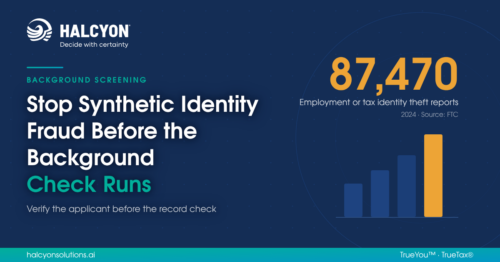
The broader identity theft environment shows how large the raw material is. Identity theft accounted for 17.5% of all 6,471,708 reports to the Consumer Sentinel Network in 2024, according to the Federal Trade Commission [2]. Every stolen data element in that pool is a potential building block for a synthetic borrower.
The stakes: lender fraud losses arrive long after approval
The defining feature of synthetic fraud is the delay between approval and loss. A synthetic borrower often behaves like a good customer for months. Payments arrive on time, limits increase, and the account looks healthy in every portfolio report. Then the identity busts out: it draws down every available line and disappears. There is no real person to collect from, so the balance goes straight to charge-off.
Lending is a primary destination for stolen and fabricated identities. Of the 1,135,291 identity theft reports the Federal Trade Commission received in 2024, 176,400 involved loan or lease fraud, according to the Consumer Sentinel Network Data Book [2]. That volume reflects the fraud that victims noticed and reported. Synthetic identities rarely produce a victim who files a report, which means they stay hidden inside performing portfolios.
The damage extends beyond the loan itself. Fraudulent accounts become infrastructure for moving stolen money. Nearly half of institutions in the same Federal Reserve Financial Services survey described mule account activity, the accounts fraudsters open to receive and move stolen funds, as an increasing (18%) or persistent (29%) issue, according to Payments Dive [1]. A lender that books synthetic borrowers absorbs credit losses, compliance exposure, and reputational risk at the same time.
Why legacy checks fail at synthetic identity fraud detection
Most legacy identity verification for lenders answers a narrow question: does this data look valid? It confirms that a Social Security number has the right format, that an address exists, and that the name and number appear together in some record. Fraudsters engineer synthetic identities to pass exactly those tests.
Traditional processes also tend to rely on credit file presence as a proxy for legitimacy. A synthetic identity that has spent a year building a thin but clean credit history now looks like a real, creditworthy applicant. The check confirms the file exists, and the file exists because the fraudster built it.
Manual review does not close the gap either. Adding human review to every suspicious application slows decisioning, frustrates legitimate borrowers, and erodes the speed advantage that fintech lenders compete on. Without a stronger signal, reviewers face the same data the automated check saw.
What works: confirming the person is real at application
Effective identity verification for lenders asks two questions instead of one. First, is this a real person? Second, is the applicant actually that person? Answering both at the moment of application, inside the decisioning flow, stops fraudulent borrowers before the lender books an account rather than discovering them at charge-off.
This is the approach behind TrueYou™ identity verification. TrueYou confirms that a borrower is who they claim to be, provides synthetic identity fraud detection, and flags identities stolen from deceased individuals. It also produces compliance documentation for each verification, so risk and compliance teams have a record of what TrueYou checked and why the lender made each decision.
Because verification happens at application, the outcome protects both sides of the business. Fraud teams stop synthetic borrowers before they age into large exposures. Product and credit teams keep approval speed for the real applicants who make up the vast majority of the funnel. This reflects the core view behind the Halcyon True Suite: fraud prevention and lending growth are not opposites. Capital that would have been lost to fraud becomes capital available to lend.
Identity risk also does not end at onboarding. Fintech lenders that close entirely online pair application-stage checks with signer verification through TrueMark™, which verifies the signer’s ID in real time at e-signature. Together, TrueYou and TrueMark cover identity across the complete digital application.
Practical fintech identity verification steps for risk and product teams
Lenders can strengthen fintech identity verification without rebuilding their stack. Start with these steps:
- Audit what your current check confirms. Determine whether it validates data format and record presence or whether it confirms a real, living person behind the application.
- Place verification inside decisioning. Identity results belong in the same automated flow as credit and income decisions, so a synthetic flag stops the application before the lender opens an account.
- Review charge-offs for synthetic patterns. Look for accounts with clean early performance followed by rapid drawdown and no recoverable borrower. These patterns reveal where your current controls failed.
- Connect fraud and mule monitoring. Treat accounts that receive and move funds unusually as possible synthetic or mule activity, not only as credit risk.
- Keep documentation audit-ready. Retain verification records for every decision so compliance teams can show regulators and partners how the lender confirmed identity.
Conclusion: verify the person, not just the data
In a fully digital funnel, the application is the only moment a lender has to confirm who it is lending to. Fraudsters build synthetic identities to survive that moment by looking valid, then let them wait until the loss is large. Lenders that confirm the applicant is real and is who they claim to be, at application and inside the decisioning flow, protect loss rates without giving up the speed their borrowers expect.
Halcyon helps digital-first lenders make that shift. See how TrueYou identity verification for lenders stops synthetic and stolen identities at application, and talk with the Halcyon team about bringing synthetic identity fraud detection into your decisioning flow. Decide with Certainty.
References
- Payments Dive (reporting Federal Reserve Financial Services). (2025). “Federal Reserve Financial Services annual risk management survey.” https://paymentsdive.com/news/federal-reserve-alarm-synthetic-identity-fraud-scams/744337
- Federal Trade Commission. (2025). “Consumer Sentinel Network Data Book 2024.” https://www.ftc.gov/system/files/ftc_gov/pdf/csn-annual-data-book-2024.pdf